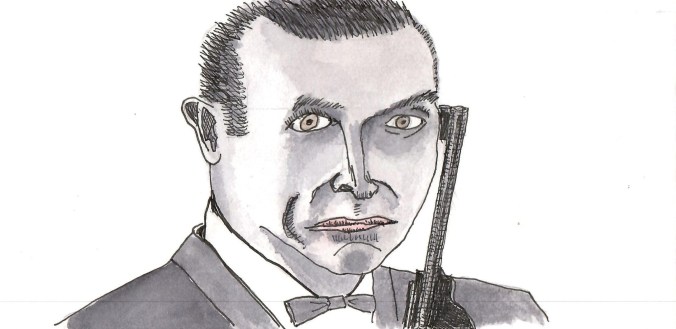
At first glance, Sean Connery’s James Bond doesn’t appear to symbolize the Tao.
Done up, always dapper; prone to flashy gadgets, shaken martinis, and high-stakes espionage: Connery’s Agent 007 seems too self-initiated, too action-prone to embody the easy-going rhythm of the Tao.
That Connery Cool
Actually, it’s Connery’s own natural poise that cools Bond’s fiery adventure — that reels in all that secret-agent energy and brings it back to center, where all its antsy potential slowly simmers, burning like an oven roasting ice.
That equilibrium, no doubt, is thanks to Venus having passed through Libra ninety-five years ago today, the day Connery was born in Edinburgh. When Venus orbits into Libra — the sign of elegant balance — the planet of love and romance steams with graceful charm.
Smooth-Talking Bond
As James Bond, Connery’s Mars in Gemini exudes a quick and quippy charisma, one that smartly neutralizes bad guys, that smoothly triumphs over all the bad girls. His witty words cut like a blade, like an infamous slap across the face.
Though gone from us since 2020, Sean Connery’s big-hearted Jupiter in Cancer still warms our amused attention. His dangerous, casino-calm grin still lingers — a reminder that, even in the world of espionage, the Tao remains forever constant, forever controlled, forever flowing free.
Celebrity Astrology
Curious about your favorite celebrity’s astrological chart and how it effects their character? Let me know in the comments.
With retirement looming on the near horizon, I often wonder where to spend my post-working life. Maybe I’ll slow travel, one-bagging it back and forth between a few select places. Or maybe one particular place will eventually call me home.
First on my list of potential destinations is Montevideo. Since 1980, every several years or so, I’ve traveled south to Uruguay to visit family friends. It’s a magical place where classic Spanish Castellano blends with Italian-immigrant slang, where African descendants beat Candombe drums in post-colonial city streets.
After all those visits, here’s my five favorite things about the Rio de la Plata capital.
Plaza Independencia
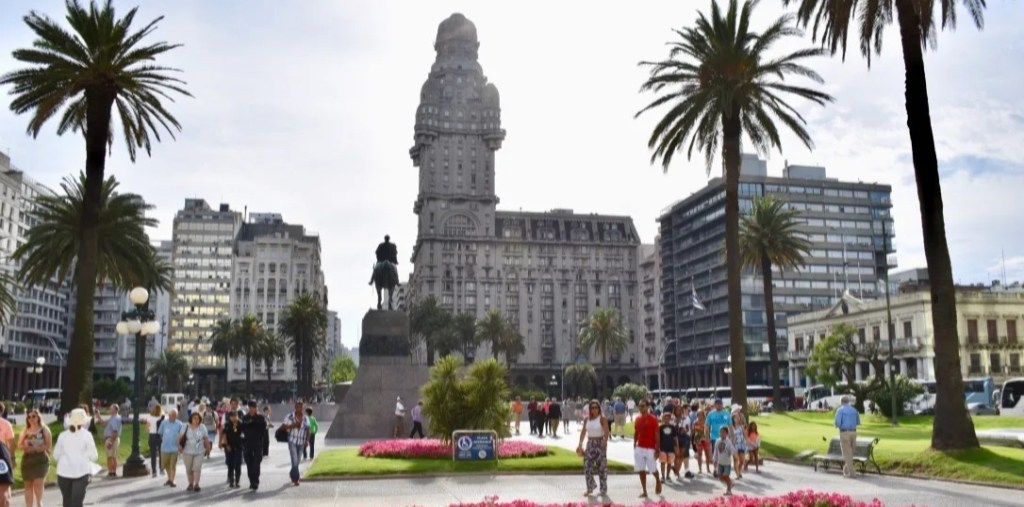
In the heart of the Old City, in the center of Plaza Independencia, the mausoleum of General Jose Artigas, the country’s first presidente, stands silently solemn. Surrounding his statue, diverse architectural towers come to attention, anchored by the bemusing Salvo Palace, its offbeat elegance a symbol of this drumbeat town.
For me, Plaza Independencia is a relaxing destination after a long morning walk, a place to pause with a coffee, to watch the map-checking tourists and the mate-sipping locals, all perfect portrait models for my furtive urban sketching.
Prado’s Museum of Art
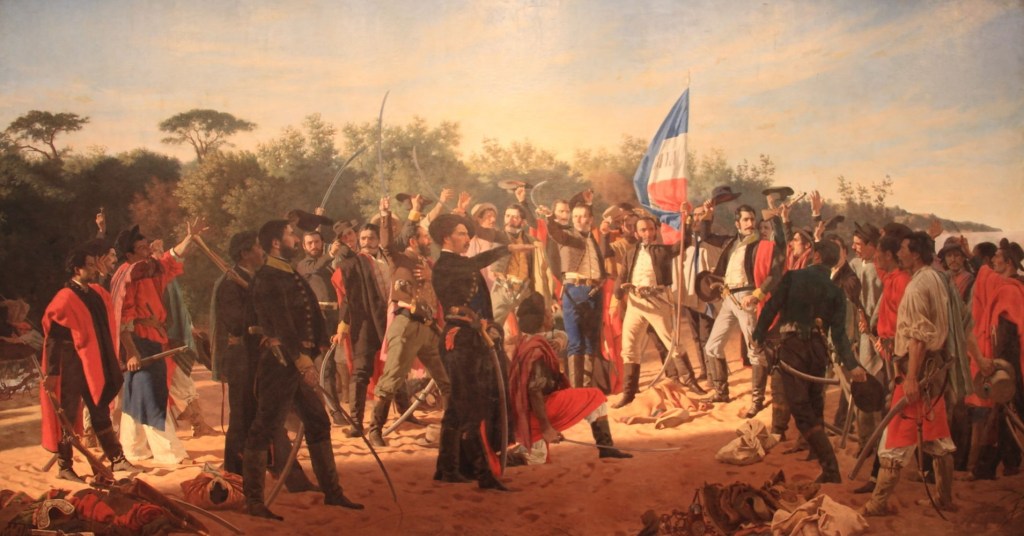
A ninety-minute walk north from the Old City, just outside the Parque Prado, the Museo Municipal de Bellas Artes curates a magnificent collection of large-scale patriotic paintings by Juan Manuel Blanes, such as the Treinta y Tres shown above.
Blanes’ depiction of Uruguayan gauchos and native Americans layer in cultural memory. On my past visits, I’ve lingered before each canvas, appreciating both their expansive historical scenes and their emotionally intricate brush strokes.
The museum also displays a lively collection by Pedro Figari, an early-modern, late-life painter whose childlike “naïve-style” honored the mid-19th-century humility of the working-class and mocked the pride of the bourgeoisie.
Playa Posit0s
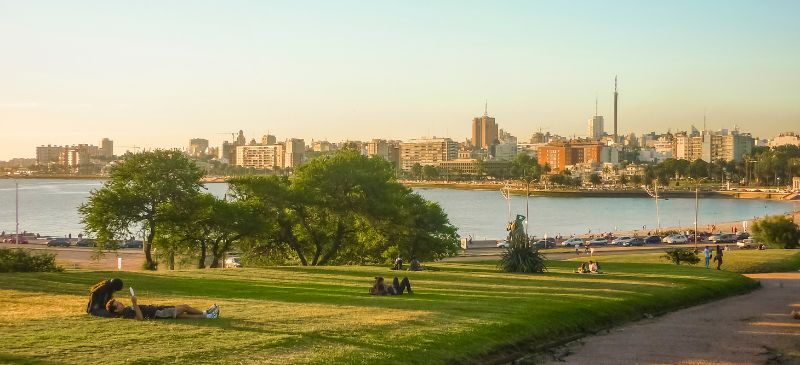
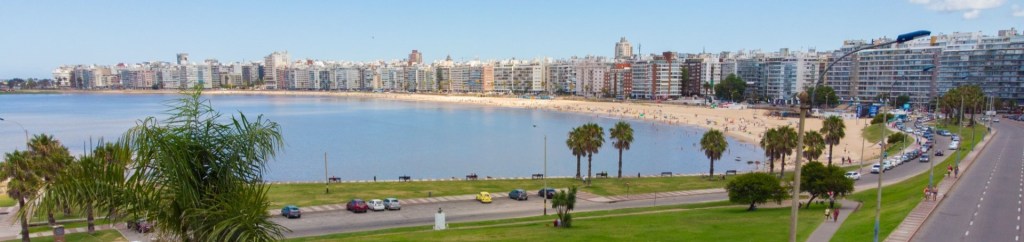
An hour south by bus, we’re chilling at the beach in the Playa Positos neighborhood, where the Rio de la Plata meets mid-20th-century high-rise apartments. The contrast of a bustling city and a wide relaxing strand symbolizes the yin/yang vibe felt throughout this meditative bay.
I’ve spent late afternoons beneath my own beach umbrella, sketching sun bathers and the inevitable impromptu futbol game. Not quite a tourist spot, this beach is mostly a neighborhood treasure where families picnic and locals kick off their zapos and spark up a smoke.
The Rambla
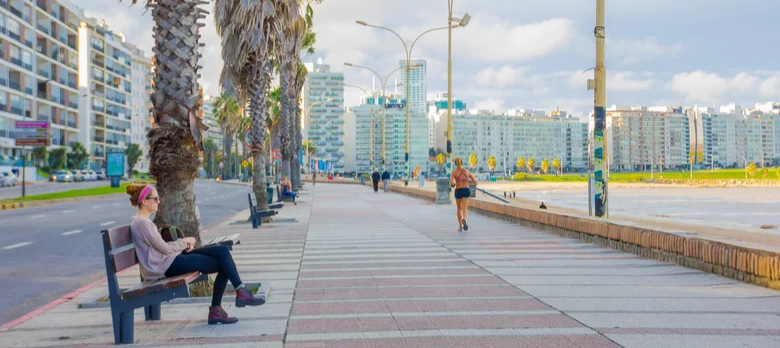
Between the beach and the blocks of high-rise apartments, the Rambla’s walking esplanade provides strollers, runners, and bicycle riders with twenty-two kilometers of a stone-mosaic pathway that lines the city’s riverfront perimeter.
I like to take my meditative walks along the wide Rambla, especially early mornings when the streets are relatively still, relatively quiet, when the playa’s gritty sand has been swept smooth by the night’s receding tide. Come evening, as the sun sets, as the Rio fires up a dusky orange, locals gather to socialize, their hot-water thermoses filling up their mate gourds.
Costa Azul
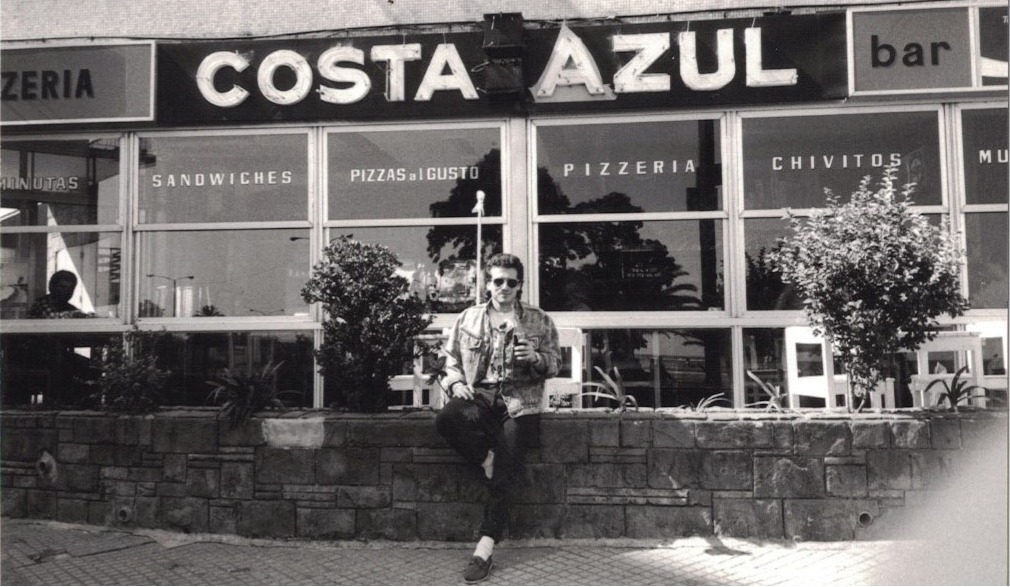
For more than forty years, my favorite Pocitos beach-view café has been Costa Azul, the one at the corner of Juan Benito Blanco and Felix Buxareo. That’s where I sit after long days of walking and sketching, where I can order up a chivito, Uruguay’s classic sizzling steak sandwich, and take long sips of the seaside air.
Retirement is not only the end of a career; it’s also the start of something new, a dawning of opportunities. As I have for decades, I’m likely to keep visiting Montevideo, staying perhaps for a season or two, then moving on to another locale. Or maybe, after four decades, I’ll put down roots and settle into the castellano sand.
How About You?
Got questions about Montevideo? Where are you thinking to retire? Let me know in the comments.
Everyone needs a hobby. Whether it’s working out at the gym, writing in a journal, tending a garden, or casting a fishing line into a stream, hobbies provide leisure and relaxation, especially for those who have recently transitioned out of the working world.
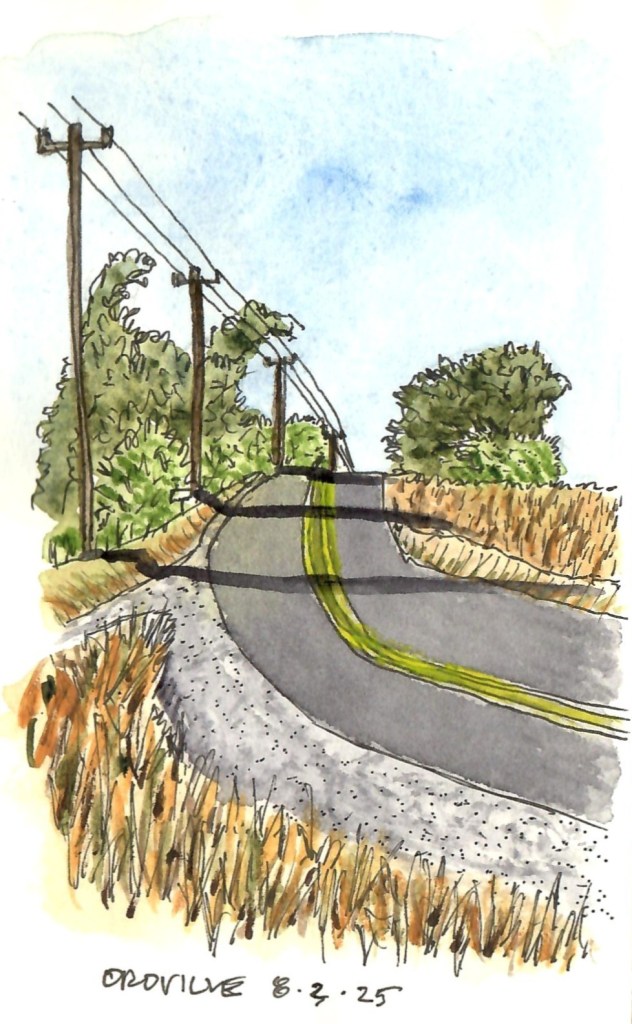
For me, I’ve found lots of relaxing pleasure when drawing and sketching with watercolor, an activity, I’ve found, that grounds me in the center of the Tao.
Flow Over Force
Watercolor teaches us to relinquish control. No matter how determined our egos may be to control the outcome of a painting, watercolor defies that control and, instead — guided by grace and fluidity — flows on its own terms, as if following its own will. Likewise, Taoism teaches us to harmonize with the natural order, to embrace surprise as an ally rather than repel it as a foe.
When painting with watercolor, each stroke is a surrender of control. We learn to adapt, to gently follow rather than impose. This dance with unpredictability is not weakness: It’s wisdom. Much like the Tao, watercolor reminds us that the soft overcomes the hard, that true freedom comes when abdicating control.
The Beauty of Impermanence
A watercolor sketch lives in the moment of creation. Its edges bleed; its colors fade. What begins with intention often ends with surprise. Taoist philosophy holds that everything is transient — like ripples in a stream or clouds passing overhead. With watercolor, impermanence is not a flaw but a virtue.
Each layer of paint dries differently, making each image unique, sui generis. An artist develops patience and humility, accepting that no intended mark will appear as intended. When completed, what remains is the spirit of the moment — a quiet reverence for the now, captured in pigment on paper.
Wu Wei in Practice
Of course, at the heart of Taoism is the concept of wu wei — the art of doing without doing. It’s not laziness, but alignment nature’s effortless flow. When applying watercolor, forcing the ego’s intention leads to muddiness; allowing things to unfold as they naturally unfurl reveals clarity and charm. A painter becomes a partner with the painted, not its maker.
Each wash of color is a meditation in non-interference. You mix, blend and brush — all without fuss. The result is often more honest than any planned outcome: It’s a surprise, a collaboration between intention and surrender. Rather than reward control, watercolor nurtures trust.
Harmony in Chaos
Watercolor thrives in the unpredictable. A splash lands off-center, a bloom spreads like mist — yet somehow, beauty emerges. Taoism sees chaos not as disorder, but as the fertile ground from which harmony blooms. When brushing on color, “accidents” become focal points, giving character and soul to a final image.
A happy watercolorist learns to welcome surprise, adjusting and adapting like a river that winds through rocky terrain. The painting process teaches that a sudden mess isn’t something to fear — it’s something to embrace, something to foster, an opportunity to discover the previously unforeseen.
Stillness in each Stroke
To paint with watercolor is to pause the world. Each stroke invites stillness — an awareness of brush, breath, and unfolding color. Taoist thought reveres quietude, seeing it as the root of insight and peace. In watercolor, distraction dulls the result, but presence sharpens the soul.
The rhythm of dipping, dabbing, and watching water glide becomes a slow dance with time. For many, early retirement is a time to dip and dabble and discover new things — some as big as a watercolor hobby, some as small as an unintended freckle on a watercolor portrait. Either way, the Tao takes the lead.
How About You?
What habits or hobbies do you plan to develop or already enjoy in retirement? Let me know in the comments.
While out on one of my afternoon walks here in San Francisco, I found a sidewalk library full of free books for the taking — no library card required.
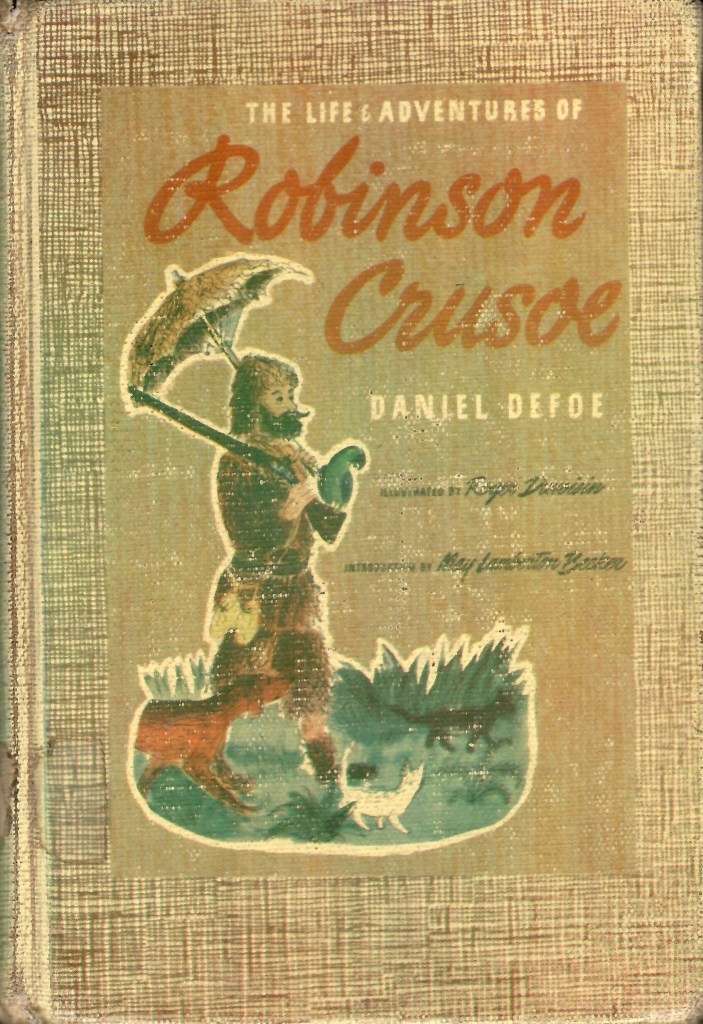
Among the many volumes jammed across the two small shelves was an old, ragged, cracked-spine, yellow-paged, 1946 edition of Daniel Defoe’s Robinson Crusoe.
Despite my senior age and three degrees in English, I had never read Defoe’s classic tale of shipwrecked adventure. So, opening the sidewalk library’s plexiglass door, I plucked the antique volume off its shelf, tucked it under my arm, and headed home to read.
Surprise! Surprise!
Three paragraphs into chapter one, I was pleased to discover several references to ancient Taoist ideas.
Of course, it’s highly unlikely that Daniel Defoe was aware of Lao-Tzu and his Taoist Book of the Way. Afterall, earliest translations into English of the Tao te Ching did not first appear until the late 19th century — more than 150 years after Robinson Crusoe was originally published in 1719.
Still, Taoist ideas lay the foundation of Defoe’s RobinsonCrusoe.
What is the Tao?
In ancient Chinese philosophy, the Tao, or the Way, represents the organic energy of life, the effortless flow of the universe. It’s the power of a river as a mountain’s melting snowfall rages toward the summer sea; conversely, it’s also the icy crust of a frozen pond in winter. Neither good nor bad, neither up nor down, neither in nor out, the Tao is comprised of all these and — mostly — everything in between.
One of the main concepts of Taoism is the idea of wu wei. Wei means any contrived action, any attempt made to thwart the natural flow of nature. Wu means no, so wu wei suggests the idea of no contrived action, of no action that goes against the flow of the Tao. Wu wei is often described as nothing, meaning no thing — that is, no thing other than the natural Tao.
Taoist Reflections
Early in chapter one, Robinson Crusoe’s father’s attempts to dissuade his son from running off to become a sailor. The father encourages his son to accept his natural status in life as a modestly well-to-do citizen, enjoying the pleasures provided by the “upper station of low life.” Such a life, the father assures his son, is the envy of both paupers and kings.
This “middle state” of society suggests the middle Way encouraged by the Tao, where extremes are best avoided, where “the high is lowered” and “the low is raised.” As stated in the Tao te Ching, what’s “most complete seems lacking,” and yet “those who are content suffer no disgrace.” Indeed, those who know when to stop chasing the wild dreams of youth go “unharmed” and “last long.”
The Tao of Retirement
Robinson Crusoe, only 18 when his story unfolds, ignores his father’s wise advice. Rather than accept the natural course of his upper-middle-class existence, he follows his dream of a life on the ocean. Soon enough, having defied both his father and the Tao, young Crusoe will eventually endure his inevitable, isolated fate.
With this early moment in the book, Defoe reminds me that there is no shame in living a simple retirement, of sitting on a porch at dusk, watching the daylight fade away into the cool embrace of night. I wish I could be satisfied with such a simple retirement. Perhaps such a fate will await me as I snuggle up to eighty. For now, though, in my mid-60s, I dream all sorts of sea-faring dreams.
Hopefully, such dreaming will not lead me to repeat Robinson Crusoe’s sad and seemingly lonely fate.
How About You?
What are your thoughts and plans for retirement? Let me know in the comments.
 Papa Gringo