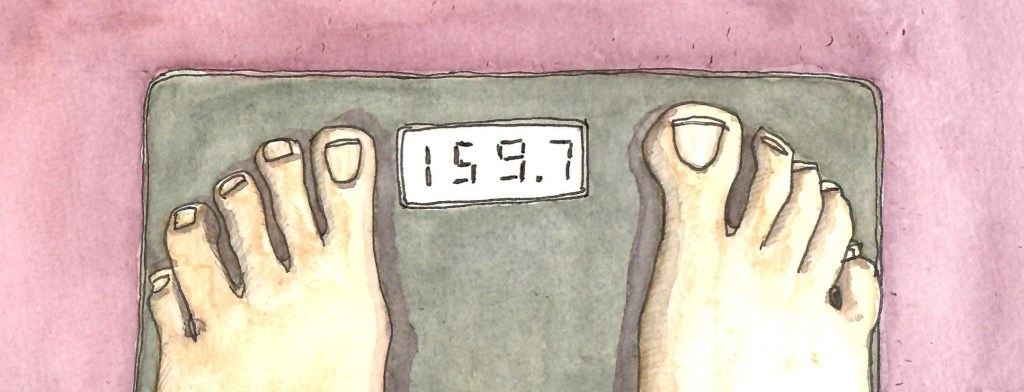
There’s an old Taoist saying: “To learn the Tao, one must first fast.” Even without understanding the modern scientific benefits of prolonged fasting, such as ketosis and autophagy, and how those benefits heal the body, ancient Taoists understood the spiritual significance of not chowing down on three full squares a day.
Of Ice and Men
Ten thousand years ago, prior to the Ice Age thaw, Stone-Age hunter-gatherers went days without any substantial nutrition, without satisfying the body’s hunger for proteins and fats. Over many millions of years, however, hominid bodies had developed processes to accommodate such long droughts in dining.
Several millennia after the glacial ice caps receded, northern-Chinese Taoists intentionally skipped a few hearty meals in order to stimulate ketosis and kick-start autophagy, allowing the body to initiate its own self-regeneration, to feed off dead and abnormal cells, strengthening the sinews that remained.
Of course, such practice was packaged as preparation for sacred religious rites, preparation that repaired and revived a body not focused on digestion. During fasting periods, senses are heightened, mindfulness improves — two states needed for success when out on extended hunting expeditions.
Full of Emptiness
In Taoism, “emptiness” is not a void to be pitied but a hollow to be hailed — a space where the Tao can flow unimpeded. It is the hollow of bamboo, the pause between breaths, the momentary silence that gives music its melody. Emptiness invites receptivity, humility and, in a spiritual sense, transformation.
Fasting, in this context, becomes the ritual enactment of emptiness: a deliberate clearing of the body’s cravings and the mind’s clutter. By abstaining from food, pungent flavors, and sensory excess, the practitioner cultivates inner quietude, a waking sleep that invites spiritual cognition.
In Taoist ritual, fasting precedes communion with the divine, echoing the belief that only through emptiness can one be filled with the Tao’s subtle presence. It is a practice of becoming porous, open to the mystery of life.
Wu Wei in Action
In Taoism, wu wei — often translated as “non-action” or “effortless action” — is the art of flowing with the natural order rather than forcing outcomes. It’s not passivity; rather, it’s a deep attunement to the rhythms of life, where action arises spontaneously from harmony.
Fasting, when viewed through this lens, becomes a practice of wu wei: a gentle release of control over the body’s desires, allowing the spirit to settle into stillness. Rather than striving or resisting, the practitioner simply surrenders and lets go — of food, stimulation and excess –and, in doing so, returns to a more elemental state.
This emptiness invites clarity, receptivity and alignment with the Tao. Like river water carving mountain stone, not by force but by flowing persistence, fasting in Taoism is a quiet surrender that opens space for surprising discovery. It is a way of becoming light, porous, and attuned to the subtle currents of being.
How About You?
Have you had any past experience with fasting? I lost about five pounds by skipping approximately ten meals last week and simplifying all the meals I did eat. Please share your experience in the comments.
 Papa Gringo