The Tao & the Weekly Exercise Tip

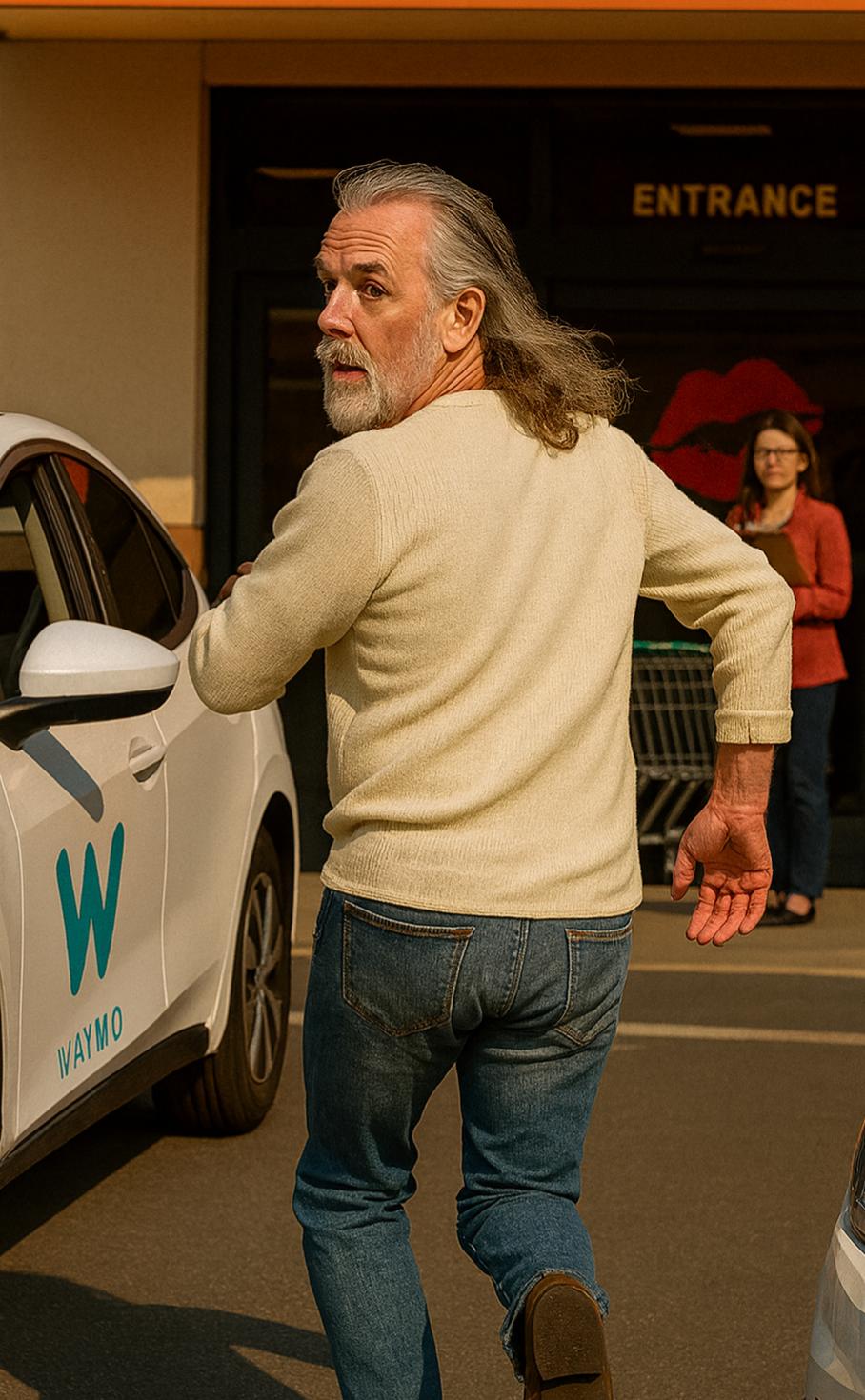
I went grocery shopping today. Here in San Francisco, getting groceries has become an obstacle course. It’s how I get my weekly exercise.

It starts as soon as I park. Before I’m even outta the car, there’s a tap on the window. It’s the box boy.

“Roll it down!”

I roll it down.

He says he’s out here “collecting shopping carts… you know… Tips!”  He flips his phone in my face. He’s got the TipMo app. The screen says: $1 / $2 / $3.

A tip? For what? Maybe I’m going to the post office. Maybe I’m here to meet a Tinder date.

Way back in the 70s, when I worked as a box boy, I never got no tips. I double-bagged groceries, I pushed heavy carts through parking lots, I loaded up trunk after trunk. Maybe I’d get a nickel. Maybe I’d get a dime, a silver dime if I was lucky.

I look at the box boy at my window: “Hold on a sec… Maybe I got some change.”

Then, while I’m fingering junk in the cup holder, the box boy loses his patience and slinks off to pursue more promising prey.

That’s when I make my move!

I’m out of my car, dashing past the empty Waymos. When I get to the train of shopping carts, I tug and I tug till I yank one loose.

Fortunately, it’s a weekday morning. There’s no kids around, no one selling TranScout cookies.

Right as the automatic door swings open, a woman with a clipboard needs a couple signatures.

“Maybe later!” I say. I try to push past her.

But she flips her phone around in my face: $2 / $4 / $6.

I fake a grab at the clipboard, then cut left, squeeze right… I’m into the store! Touchdown!

So, I’m in the produce section, but I can’t find the Honeycrisp apples. I ask the guy stocking the broccoli. “Honeycrisp apples?” he asks. He pulls out his phone to check their location. “Oh! Oh! Over here!” And leads me to the apples.

And I am so grateful for this small simple kindness. I say, “Thank you so much!”

He flips his phone around: $3 / $6 / $9.

I can’t believe it!

I tap a nearby woman squeezing cucumbers.

“What’s with all this tipping?”

“Times are tough!” She flips her phone around: $12.95.

That’s enough exercise for one week.
The Tao of Fasting

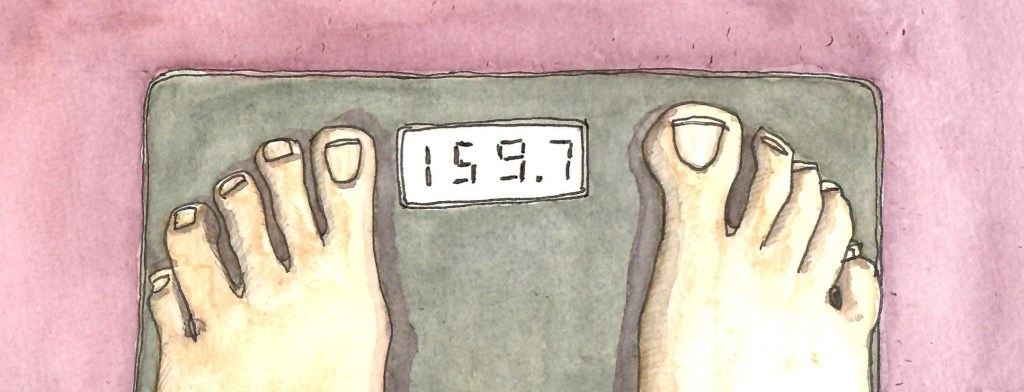
Watercolor image of Papa Gringo's on a bathroom scale, showing the weight as 159.7 pounds.

There’s an old Taoist saying: “To learn the Tao, one must first fast.” Even without understanding the modern scientific benefits of prolonged fasting, such as ketosis and autophagy, and how those benefits heal the body, ancient Taoists understood the spiritual significance of not chowing down on three full squares a day.

Of Ice and Men

Ten thousand years ago, prior to the Ice Age thaw, Stone-Age hunter-gatherers went days without any substantial nutrition, without satisfying the body’s hunger for proteins and fats. Over many millions of years, however, hominid bodies had developed processes to accommodate such long droughts in dining.

Several millennia after the glacial ice caps receded, northern-Chinese Taoists intentionally skipped a few hearty meals in order to stimulate ketosis and kick-start autophagy, allowing the body to initiate its own self-regeneration, to feed off dead and abnormal cells, strengthening the sinews that remained.

Of course, such practice was packaged as preparation for sacred religious rites, preparation that repaired and revived a body not focused on digestion. During fasting periods, senses are heightened, mindfulness improves — two states needed for success when out on extended hunting expeditions.

Full of Emptiness

In Taoism, “emptiness” is not a void to be pitied but a hollow to be hailed — a space where the Tao can flow unimpeded. It is the hollow of bamboo, the pause between breaths, the momentary silence that gives music its melody. Emptiness invites receptivity, humility and, in a spiritual sense, transformation.

Fasting, in this context, becomes the ritual enactment of emptiness: a deliberate clearing of the body’s cravings and the mind’s clutter. By abstaining from food, pungent flavors, and sensory excess, the practitioner cultivates inner quietude, a waking sleep that invites spiritual cognition.

In Taoist ritual, fasting precedes communion with the divine, echoing the belief that only through emptiness can one be filled with the Tao’s subtle presence. It is a practice of becoming porous, open to the mystery of life.

Wu Wei in Action

In Taoism, wu wei — often translated as “non-action” or “effortless action” — is the art of flowing with the natural order rather than forcing outcomes. It’s not passivity; rather, it’s a deep attunement to the rhythms of life, where action arises spontaneously from harmony.

Fasting, when viewed through this lens, becomes a practice of wu wei: a gentle release of control over the body’s desires, allowing the spirit to settle into stillness. Rather than striving or resisting, the practitioner simply surrenders and lets go — of food, stimulation and excess –and, in doing so, returns to a more elemental state.

This emptiness invites clarity, receptivity and alignment with the Tao. Like river water carving mountain stone, not by force but by flowing persistence, fasting in Taoism is a quiet surrender that opens space for surprising discovery. It is a way of becoming light, porous, and attuned to the subtle currents of being.

How About You?

Have you had any past experience with fasting? I lost about five pounds by skipping approximately ten meals last week and simplifying all the meals I did eat. Please share your experience in the comments.