Retirement Option #2: Guanajuato, Mexico

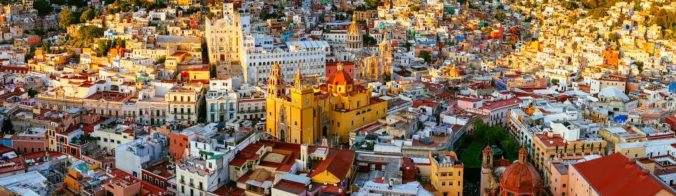
Panoramic photograph of Guanajuato, Mexico.

Though spending only a weekend there more than forty years ago, I still carry found memories of Guanajuato – its rain-glistened cobblestone streets full of mariachi music, its little plazas and sidewalk cafes surrounded by brilliant bold colors.

For decades, I’ve dreamed of returning.  To start, I hope to stay for a month or two and take Spanish lessons at a local school, meeting other expats and local artists and academics – all while drawing and painting in my portable watercolor sketchbook.

After that, I’d like to branch out, spending time in each of the surrounding mountain pueblos, all of them rich with revolutionary history, with the lingering echoes of miners’ cries as they discovered silver and gold.  I’ll sketch the Tao all over these towns and, perhaps, find one for settling down.

San Felipe
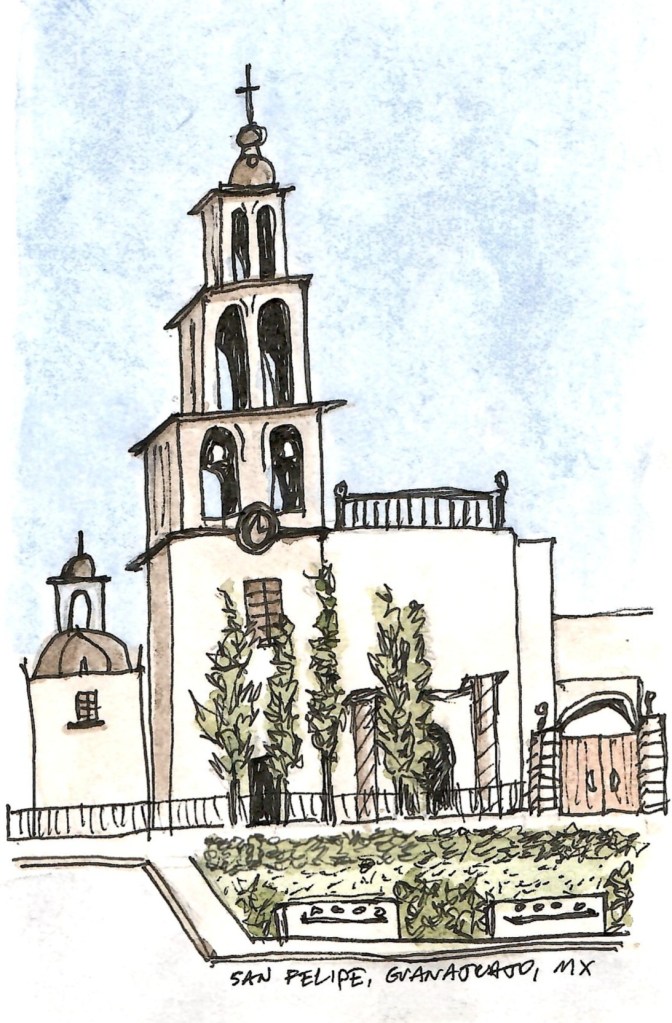
A pen-and-ink watercolor illustration of the main church in main plaza of San Felipe, Guanajuato, Mexico.

Long before the Spanish arrived in the mid-16th century, the Chichimeca people populated this region that borders the stunning Parque Nacional Sierra de Lobos, which served as a natural forested fortress for their defense. 

Their legacy adds a layer of ancestral depth to the pueblo’s identity — one of rooted resilience, one that moved Mexico to seek independence from Spain.

Irapuato

With its famed fertile soil and temperate climate, Irapuato was originally known for its yield of sweet guavas. Today, it harvests the majority of Mexico’s juicy strawberry crop and celebrates its annual yield with a Festival de la Fresas

Stretching over six kilometers, its ornate 18th-century Romanesque aqueduct channels nearby mountain water to the colonial city’s center, where it nourishes a lavish botanical garden.
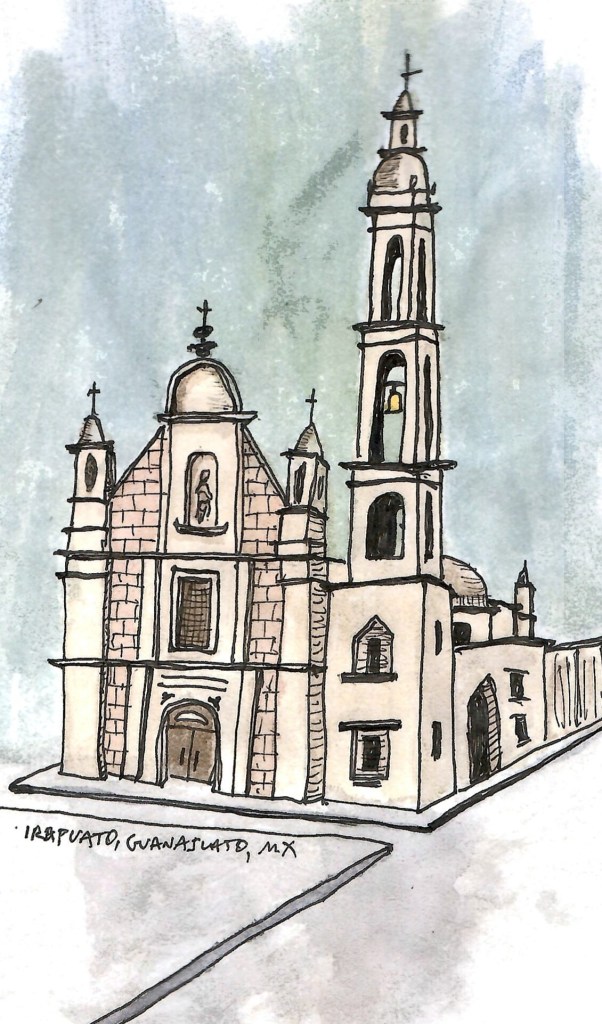
A pen-and-ink watercolor illustration of the main church in main plaza of Irapuato, Mexico.

San Luis de la Paz

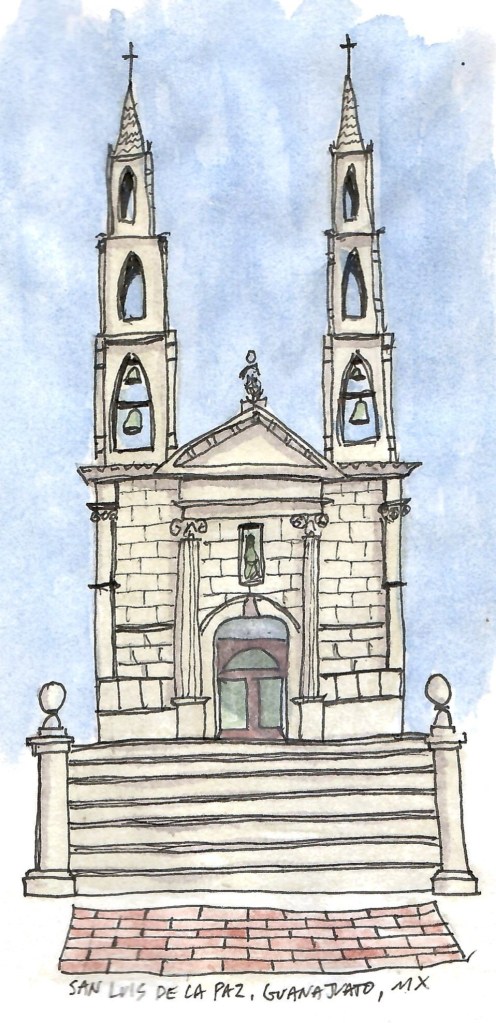
A pen-and-ink watercolor illustration of the main church in main plaza of San Luis de la Paz, Mexico.

Founded in August 1552 to mark the Spanish-brokered peace treaty between the native Otomi and Chichimeca peoples, San Luis de la Paz stands today as a symbol of resistance, resilience and reconciliation.

Once a strategic outpost along the Spanish Silver Route, the town — surrounded by sacred mountains, winding rivers, and striking rock formations — played a vital role in colonial trade and cultural exchange across the central Mexican highlands.

Dolores Hidalgo

In 1810, Father Miguel Hidalgo sounded the church bells, el Grito de Dolores, igniting a revolution. Today, Dolores Hidalgo’s central plaza teems with pottery workshops, mariachi echoes, and the warmth of colonial charm.

Designated a Pueblo Mágico, the town invites visitors to savor strawberry ices, to honor José Alfredo Jiménez’s poetic legacy, and to sample the quiet rise of vineyards amid its storied, sunlit hills.
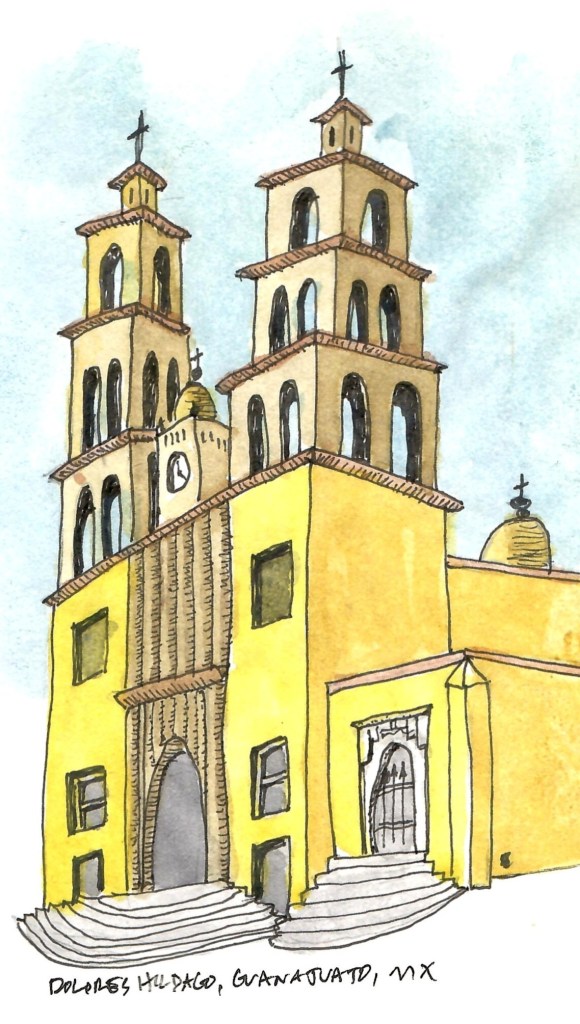
A pen-and-ink watercolor illustration of the main church in main plaza of Dolores Hidalgo, Mexico.

San Jose Iturbide

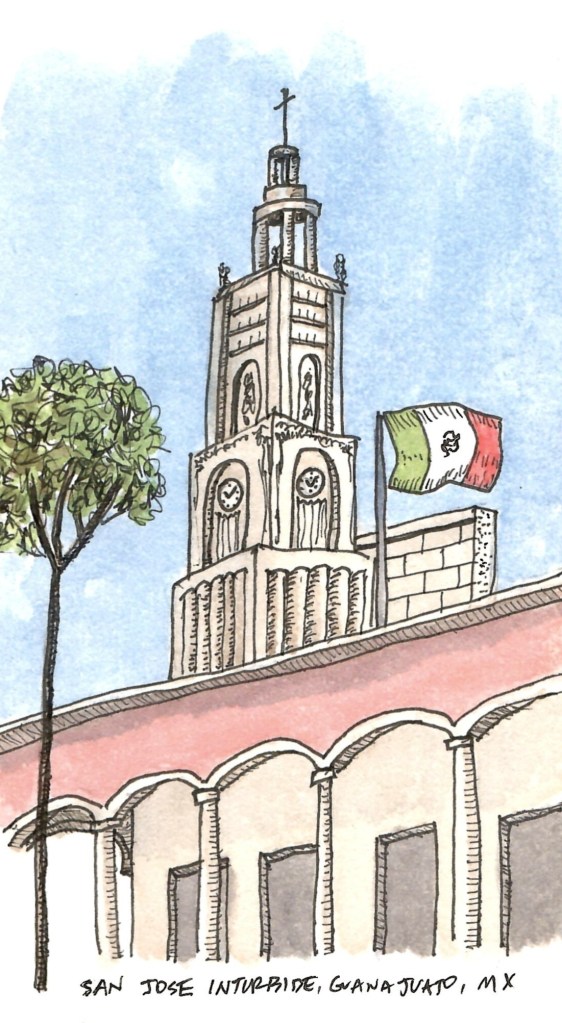
Pen-and-ink watercolor sketch of a church tower in San Jose Inturbide. A Mexican flag flies from a nearby pole.

Founded in 1754 as Casas Viejas, the renamed mountain pueblo honors both St Joseph and Agustin de Iturbide, Mexico’s first emperor, with stunning neoclassical and Baroque architecture; festive spring traditions; and culinary delights such as cajeta, a goat’s-milk caramel.

In dusty whispers of one-time wealth, local lore speaks of mining carriages rumbling down cobbled colonial roads, of wooden wheels on chiseled stone as they ferried silver, cinnabar, and dreams of fortune from Sierra Gorda mines.

How About You?

Ever been to Guanajuato or any of its surrounding pueblos? Tell me about it in the comments.
Retirement Option #1: Montevideo, Uruguay

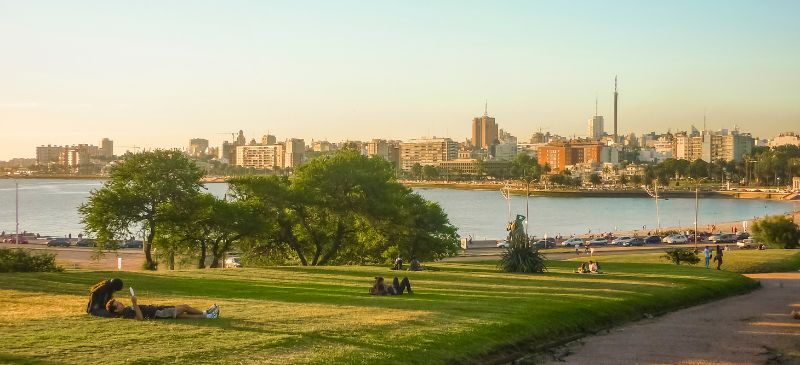
Locals lounging on the grass at sunset, Playa Ramirez in the background

With retirement looming on the near horizon, I often wonder where to spend my post-working life.  Maybe I’ll slow travel, one-bagging it back and forth between a few select places. Or maybe one particular place will eventually call me home. 

First on my list of potential destinations is Montevideo.  Since 1980, every several years or so, I’ve traveled south to Uruguay to visit family friends.  It’s a magical place where classic Spanish Castellano blends with Italian-immigrant slang, where African descendants beat Candombe drums in post-colonial city streets. 

After all those visits, here’s my five favorite things about the Rio de la Plata capital.

Plaza Independencia

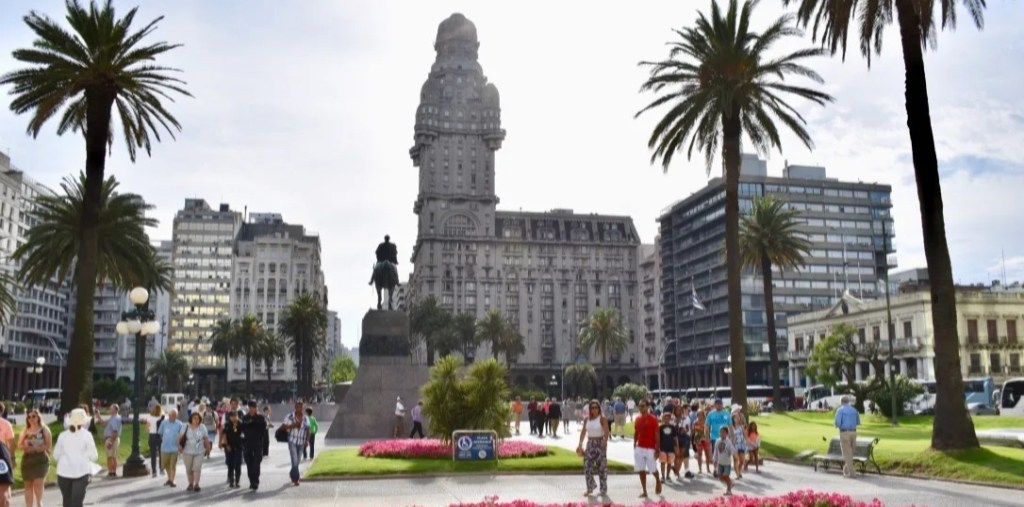
Plaza Independencia with Salvo Palace in the background

In the heart of the Old City, in the center of Plaza Independencia, the mausoleum of General Jose Artigas, the country’s first presidente, stands silently solemn. Surrounding his statue, diverse architectural towers come to attention, anchored by the bemusing Salvo Palace, its offbeat elegance a symbol of this drumbeat town. 

For me, Plaza Independencia is a relaxing destination after a long morning walk, a place to pause with a coffee, to watch the map-checking tourists and the mate-sipping locals, all perfect portrait models for my furtive urban sketching.  

Prado’s Museum of Art

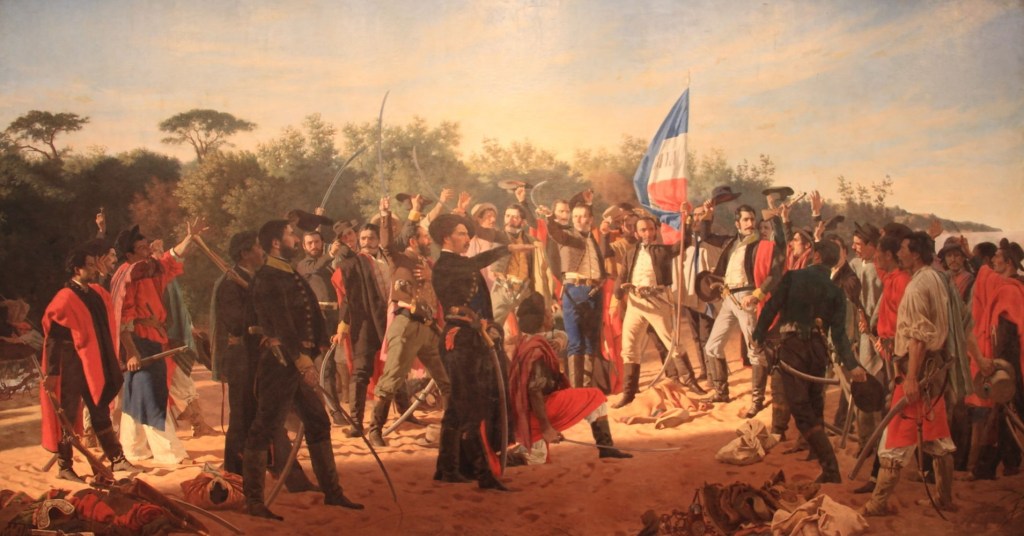
Juan Manuel Blanes' mega painting "The Thirty-three."

A ninety-minute walk north from the Old City, just outside the Parque Prado, the Museo Municipal de Bellas Artes curates a magnificent collection of large-scale patriotic paintings by Juan Manuel Blanes, such as the Treinta y Tres shown above.

Blanes’ depiction of Uruguayan gauchos and native Americans layer in cultural memory.  On my past visits, I’ve lingered before each canvas, appreciating both their expansive historical scenes and their emotionally intricate brush strokes. 

The museum also displays a lively collection by Pedro Figari, an early-modern, late-life painter whose childlike “naïve-style” honored the mid-19th-century humility of the working-class and mocked the pride of the bourgeoisie.  

Playa Posit0s

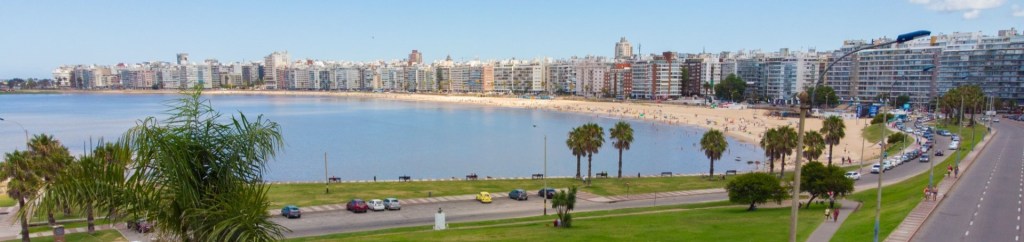
A panoramic view of Playa Pocitos with the blue Rio de la Plata lapping at the beach along the city's edge.

An hour south by bus, we’re chilling at the beach in the Playa Positos neighborhood, where the Rio de la Plata meets mid-20th-century high-rise apartments.  The contrast of a bustling city and a wide relaxing strand symbolizes the yin/yang vibe felt throughout this meditative bay. 

I’ve spent late afternoons beneath my own beach umbrella, sketching sun bathers and the inevitable impromptu futbol game.  Not quite a tourist spot, this beach is mostly a neighborhood treasure where families picnic and locals kick off their zapos and spark up a smoke.

The Rambla

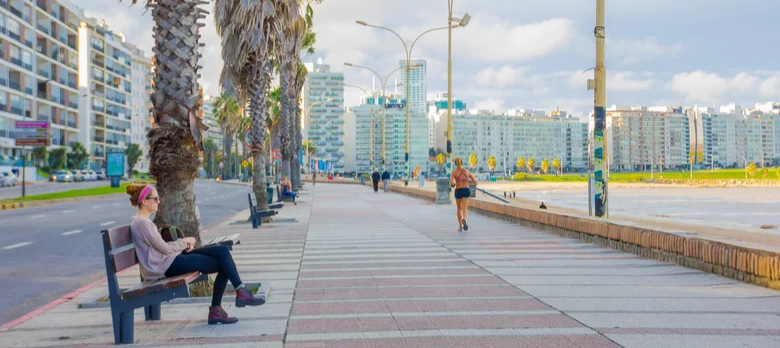
A woman relaxes on a bench along the Rambla at Playa Pocitos

Between the beach and the blocks of high-rise apartments, the Rambla’s walking esplanade provides strollers, runners, and bicycle riders with twenty-two kilometers of a stone-mosaic pathway that lines the city’s riverfront perimeter. 

I like to take my meditative walks along the wide Rambla, especially early mornings when the streets are relatively still, relatively quiet, when the playa’s gritty sand has been swept smooth by the night’s receding tide.  Come evening, as the sun sets, as the Rio fires up a dusky orange, locals gather to socialize, their hot-water thermoses filling up their mate gourds.   

Costa Azul

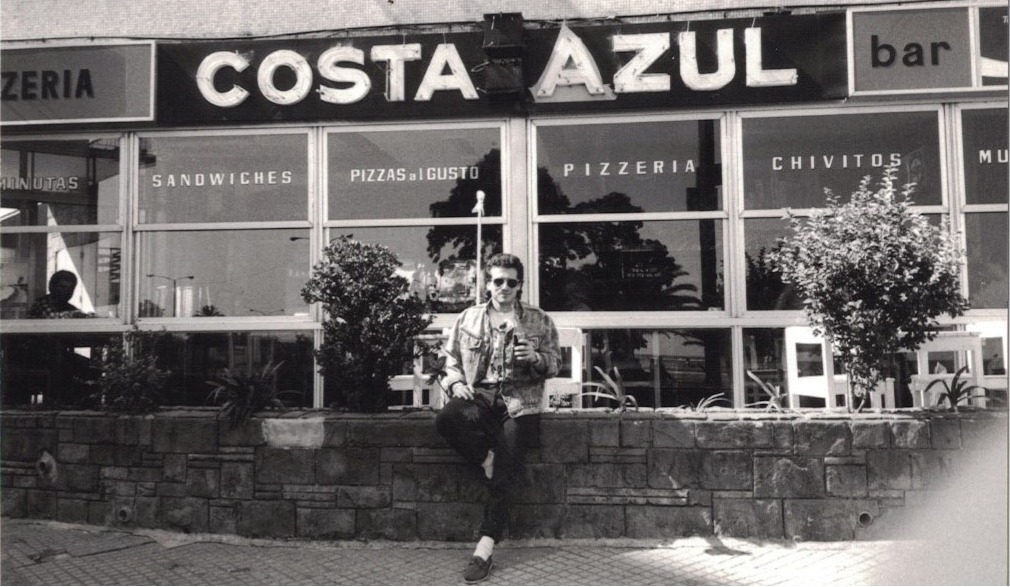
Papa Gringo standing outside Costa Azul, circa 1989

For more than forty years, my favorite Pocitos beach-view café has been Costa Azul, the one at the corner of Juan Benito Blanco and Felix Buxareo.  That’s where I sit after long days of walking and sketching, where I can order up a chivito, Uruguay’s classic sizzling steak sandwich, and take long sips of the seaside air.

Retirement is not only the end of a career; it’s also the start of something new, a dawning of opportunities.  As I have for decades, I’m likely to keep visiting Montevideo, staying perhaps for a season or two, then moving on to another locale.  Or maybe, after four decades, I’ll put down roots and settle into the castellano sand.

How About You?

Got questions about Montevideo?  Where are you thinking to retire?  Let me know in the comments.