Last summer, the Tao kicked my butt, reminding me that retirement’s coming soon, that I should start thinking about life post-teaching. One idea was to start this blog. I liked that idea. I still like that idea.
But now I’m getting kicked in the butt again.
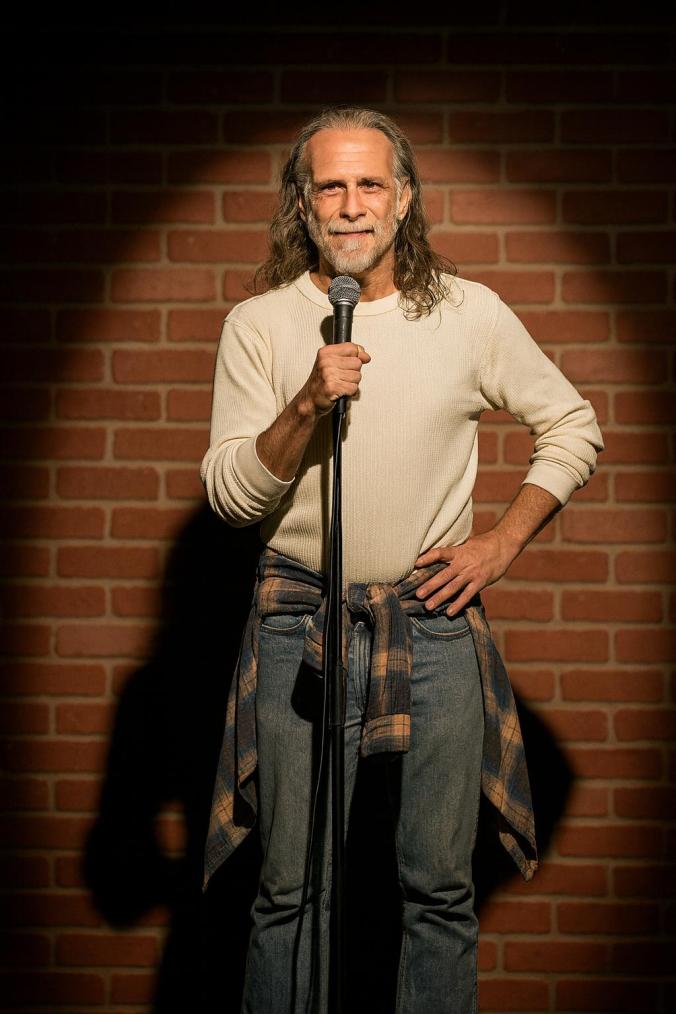
Earlier this month, while replacing a burnt-out bulb in the kitchen, something sparked in my mind. I suddenly thought of pursuing stand-up comedy.
Thirty-five years ago, back in L.A., I had taken some stand-up comedy classes. I did a few open mics. I had a couple good shows. But I never took it beyond that.
I didn’t like the late-night hours or the waiting around for my two-minute turn. Instead, I went to grad school, got myself a masters, moved to the Bay, then started a career teaching college writing.
The teaching path has served me well. I’ve been blessed to have served as a Bodhisattva for so very many students. Standing at the front of all those classes even allowed me the chance to dabble around with standup skills.
However, even today, the thought of attending late-night open mics, of waiting around for a sixty-second spotlight, just doesn’t sound appealing. Still, I’d like to start a regular joke-writing practice. I recently got a couple books and found some writing tips online.
Writing jokes could be fun. Like solving crossword puzzles, it can keep my mushy mind sharp. And I can start an Instagram page and a YouTube channel, both featuring brief video clips of me reciting one-liners or extended little bits.
Writing bits and putting them online is something I could do from anywhere — not only here in San Francisco, but also down south by the Rio de la Plata or up in the hills of Guanajuato.
To be honest, the thought makes me feel a little nervous. I’m afraid I won’t have the talent to write or create consistent funny material. I’m afraid my videos will suck. But even if they do, so what?
It’s fun to try and go with the flow, especially when the Tao is running like a wild summer stream.
What About You?
Have you got any crazy dreams you might be afraid to pursue? Let me know in the comments. I could use a little empathy.











 Papa Gringo